






Snorkeling looks calm: float, breathe, look down. So it’s easy to assume it barely “counts” as exercise. In reality, the water adds resistance, your legs work continuously (especially with fins), and conditions like waves can quietly raise your effort. If you’re wondering how many calories do you burn snorkeling, this guide will give you realistic ranges, explain what changes the number, and show you simple ways to estimate your own burn without obsessing over perfect precision.
Average Calories Burned While Snorkeling
Most people don’t snorkel at a constant intensity throughout the entire session. You might swim harder to reach a viewing area, slow down while observing marine life, and then put in more effort when returning against a current. Because of these natural variations in effort, calorie burn is better understood as a range rather than a single fixed number.
For a typical recreational snorkel (easy-to-moderate kicking), how many calories do you burn snorkeling often lands in the same neighborhood as a brisk walk to light swim—then spikes higher when conditions or pace ramp up.
Calories Burned Per 30 Minutes of Snorkeling
- Easy / relaxed snorkel: ~100–180 calories per 30 minutes
- Moderate pace (steady finning): ~180–280 calories per 30 minutes
- Hard effort (current, fast pace): ~280–400+ calories per 30 minutes
Table: Calories Burned Per Hour for Different Body Weights
Heavier bodies generally burn more calories at the same effort. Here’s a moderate snorkeling pace example:
| Body weight | 1 hour (moderate) |
|---|---|
| 125 lb (57 kg) | ~250–350 calories |
| 155 lb (70 kg) | ~300–420 calories |
| 185 lb (84 kg) | ~360–520 calories |
| 215 lb (98 kg) | ~420–620 calories |
How Snorkeling Compares to Swimming and Other Water Sports
Snorkeling is usually less intense than lap swimming, but it can surprise you:
- Snorkeling (typical): moderate steady leg work, low-impact
- Lap swimming: higher intensity, full-body, usually higher calorie burn
- Kayaking / paddleboarding: varies a lot; wind and technique matter
If you’ve ever finished a “chill” snorkel with tired calves, that’s the water resistance doing its job.
What Affects Calories Burned While Snorkeling
Two people can snorkel side-by-side and burn very different calories, even in the same time. Small differences—kicking style, body position, and whether you’re dealing with chop—add up fast.
If you’re trying to understand how many calories does snorkeling burn for you, focus on intensity, conditions, and how much your gear helps or fights you.
Swimming Speed and Movement Intensity
The biggest driver is simple: how hard you’re working. Easy sightseeing with occasional kicks burns less than continuous finning across open water. If you’re breathing harder, kicking faster, or having to “push” water, your calorie burn climbs quickly.
Water Conditions Like Waves, Currents, and Temperature
- Currents/waves: force you to kick more to hold position or return safely
- Choppy surface: makes efficient breathing and movement harder
- Cooler water: can increase energy use slightly, but don’t rely on it—safety comes first
Gear Impact Including Fins, Masks, and Underwater Scooters
- Fins: often increase leg workload because you’re moving more water each kick (and many people kick harder with them).
- Ill-fitting fins: can waste energy and cause cramps—higher effort, worse results.
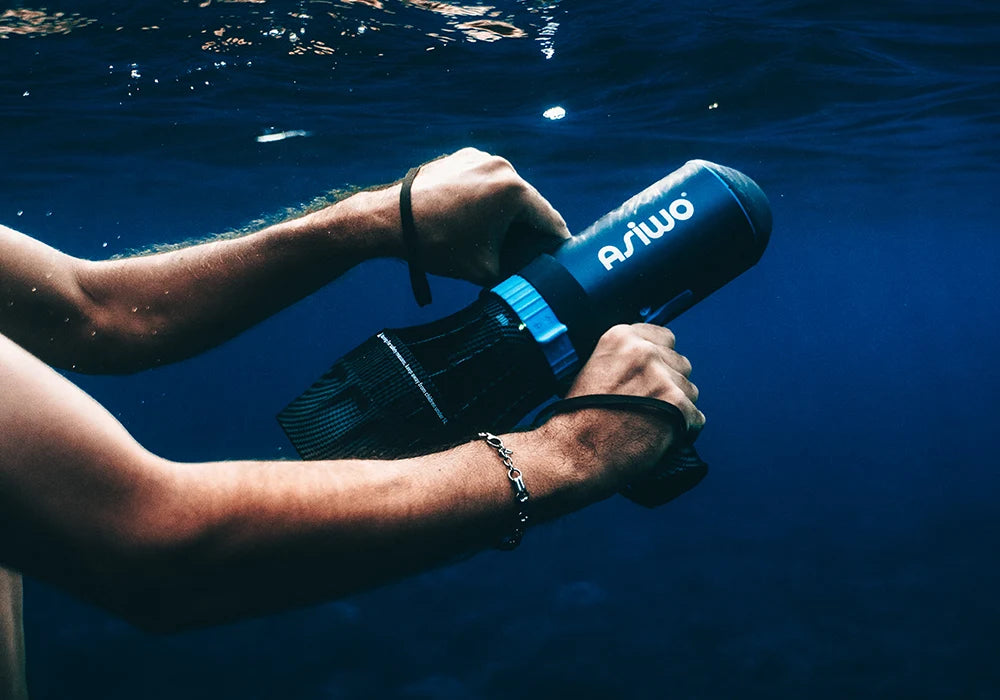
- Underwater scooters: usually reduce effort a lot. If you’re being towed along, your calories burned while snorkeling can drop sharply.

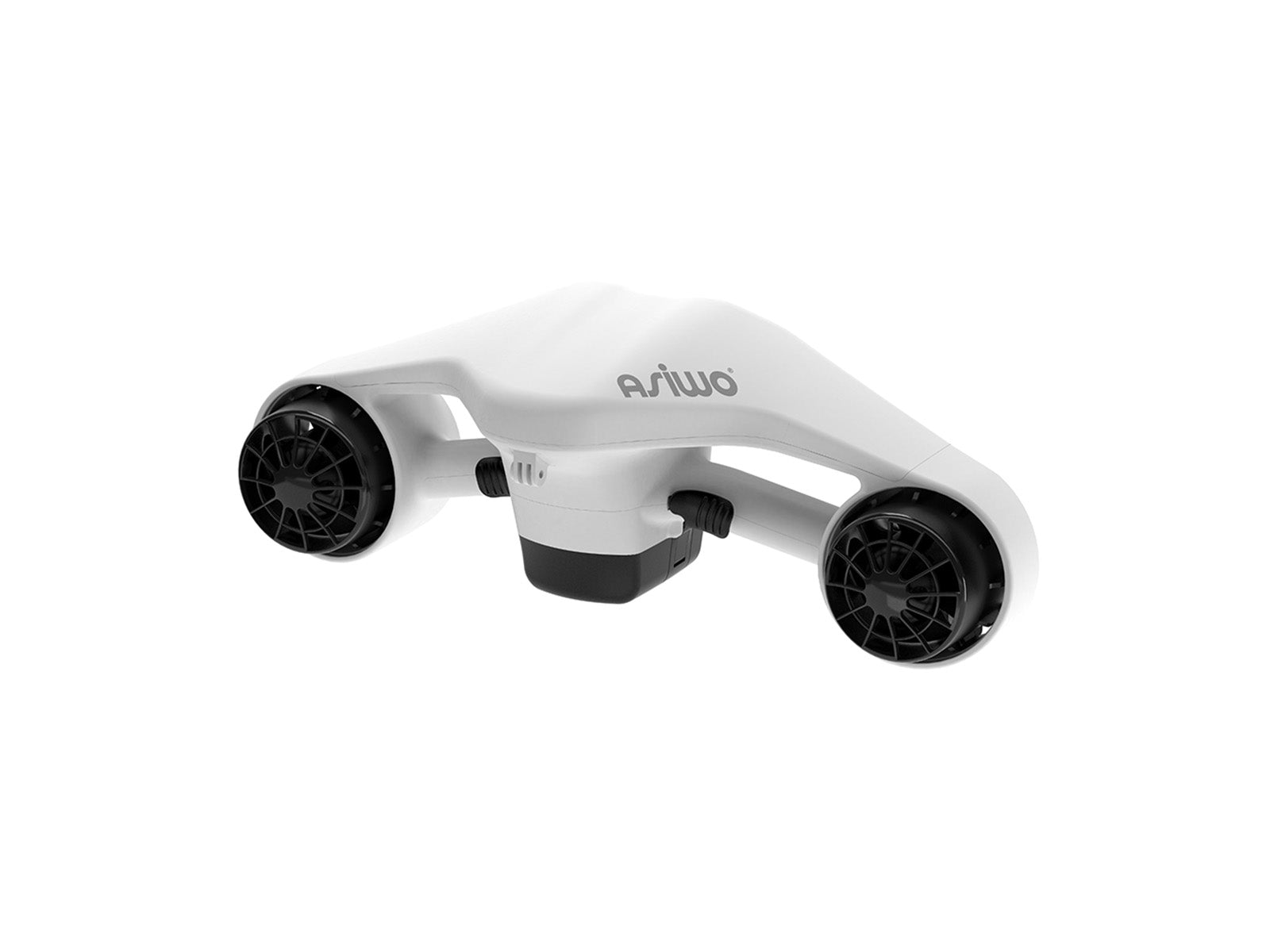
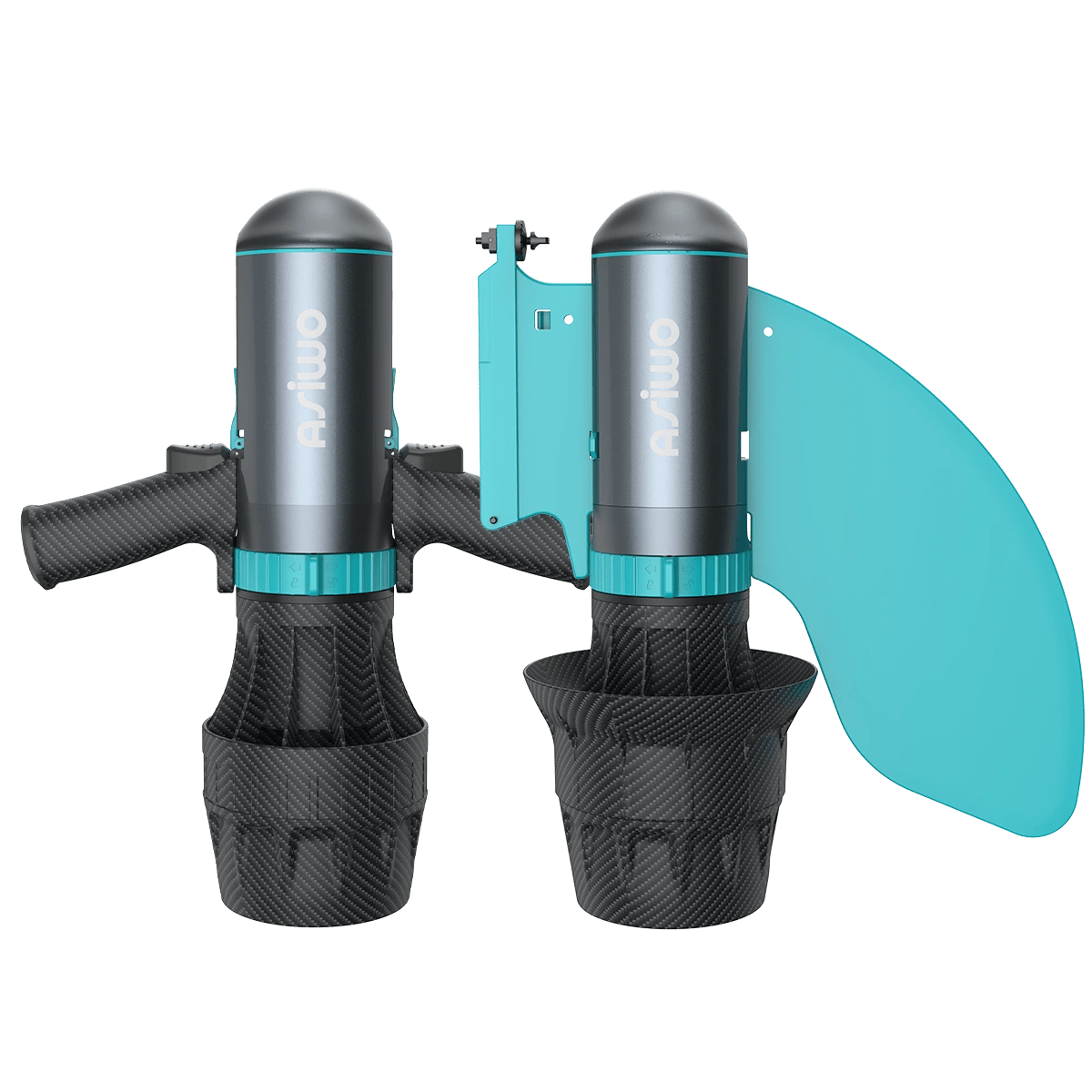
ASIWO Manta is a lightweight underwater scooter for surface snorkeling and shallow-water exploring. With three speed modes, it helps you glide smoothly, reduce fatigue, and keep a steady face-down position for easier breathing.
Calories Burned Snorkeling vs Other Activities
Comparing snorkeling with familiar activities can make calorie estimates easier to understand. The purpose isn’t to compare which activity is better, but to give a realistic perspective so calorie expectations are based on practical, reliable estimates.
- Snorkeling vs lap swimming: lap swimming is typically higher per minute because it’s continuous, full-body propulsion. Snorkeling can approach it when you’re working against conditions or doing faster intervals.
- Snorkeling vs scuba diving: scuba often burns less than people expect because buoyancy and slow movement reduce constant kicking (though carrying gear and entries can be demanding).
- Snorkeling vs walking/kayaking/paddleboarding: relaxed snorkeling often matches a brisk walk; harder snorkeling can compete with moderate paddling, especially in rougher water.
How to Burn More Calories While Snorkeling Safely
If your goal is fitness, the safest “upgrade” is usually more time and better technique, not brute-force speed. Water sports punish sloppy effort—overkicking and bad posture can spike fatigue without giving you a clean training effect.
Here are practical ways to raise how many calories do you burn snorkeling without turning your snorkel into a sufferfest.
- Step 1 — Add distance before you add intensity: Pick a route you can exit easily. Add 5–10 minutes per session before you try pushing pace.
-
Step 2 — Use efficient fin technique:
- Kick from the hips, not the knees
- Keep kicks smaller and steadier (big splashing kicks waste energy)
- Maintain a long, streamlined body position
- Step 3 — Try simple intervals: Example: 2 minutes steady sightseeing, 30 seconds faster finning. Repeat 6–10 times, then easy snorkel back.
- Step 4 — Watch fatigue signals early: Cramping calves, tight ankles, or feeling “air hungry” are signs to slow down. In open water, safety beats calorie goals every time.

How to Estimate Your Personal Snorkeling Calorie Burn
Even the best calculator is still an estimate, because real snorkeling is stop-and-go and conditions change. But you can get close enough to plan workouts, manage recovery, or compare sessions.
If you want a number for how many calories do you burn snorkeling, use body weight plus METs as your starting point, then adjust based on how hard the session felt.
Using Body Weight and MET Values to Calculate Calories
A common formula is:
Calories = MET × 3.5 × weight(kg) ÷ 200 × minutes
Typical MET ranges:
- Easy snorkel: ~3–4 MET
- Moderate snorkel: ~5–6 MET
- Hard effort / current / fast pace: ~7–9 MET
Quick example (155 lb / 70 kg, 60 min, moderate 6 MET):
6 × 3.5 × 70 ÷ 200 × 60 ≈ 441 calories
How Fitness Trackers and Smartwatches Measure Snorkeling Activity
Most wearables don’t “understand” snorkeling perfectly. They usually estimate from heart rate trends, movement (accelerometer), time spent active, and sometimes GPS (often unreliable in water). So when your watch shows a number, treat it as a trend, not a lab result.
Why Underwater Calorie Estimates Are Often Inaccurate
- Wrist movement in water can confuse motion sensors
- Heart rate can lag or spike due to breathing patterns, stress, or cold
- Frequent pauses (reef viewing) skew averages
- Saltwater buoyancy changes effort compared to pool swimming
FAQs About Calorie Burn While Snorkeling
Why did my snorkel feel easy but still leave me sore?
Because it’s steady, repetitive leg work—often lots of calf and hip flexor action. It can feel relaxed while still building fatigue.
Does floating around count as exercise?
A little, but not much. Passive snorkeling (minimal kicking, lots of pausing) is usually on the low end of how many calories does snorkeling burn.
Do buoyancy vests reduce calorie burn?
They can, because they make floating effortless. They’re great for safety and comfort—just don’t expect the same burn as active finning.
Do underwater scooters ruin the workout?
They can reduce effort a lot. If you use one, think of it as a sightseeing tool, not a calorie-burn session.
How can I make snorkeling more of a workout without going faster?
Increase time, choose a slightly longer route, and add short intervals—those usually raise calorie burn more safely than sprinting.
Conclusion
Snorkeling can be a legit workout, especially when you’re finning steadily, covering distance, or dealing with waves and current. Your burn depends most on intensity, conditions, and how much your gear helps you move versus carry you along. Use ranges, not a single “perfect” number, and judge sessions by consistency and recovery. If you’re tracking fitness, estimate with METs and adjust based on effort—then you’ll have a realistic handle on how many calories do you burn snorkeling and how to nudge it up safely over time.


Leave a comment