






Quick Answer: Knowing how to use a dive flag when snorkeling involves towing a buoyant surface float equipped with a high-visibility Diver Down flag via a dedicated floating polypropylene line attached to a quick-release waist clip. It visually alerts motorized vessels to stay at least 100 to 300 feet away and operate at idle speed, protecting snorkelers from collision and propeller hazards.
Whether you are skimming shallow barrier reefs or venturing into deeper coastal channels, navigating surface waters safely requires making yourself visible to motorized watercraft. Motorboats and jet skis running on plane sit bow-high, leaving skippers blind to low-profile swimmers and snorkel tubes. Displaying a compliant dive flag establishes a legal perimeter, signaling active underwater presence.
Do You Need a Dive Flag for Snorkeling? Regulations vs. Safety
In many premier coastal regions—including Florida, Hawaii, parts of Australia, and Mediterranean coastal reserves—maritime safety statutes require any person swimming or diving outside protected bathing zones to display an approved diver down flag. Even where local ordinances do not strictly mandate flags for surface snorkelers, towing a surface marker float is essential risk management in any navigable waterway.
Two distinct flag types govern marine activities. Knowing the difference ensures proper legal compliance and boater recognition:
| Flag Type | Visual Design | Primary Function | Recommended Snorkeling Rig |
|---|---|---|---|
| Diver Down Flag | Red rectangle with a diagonal white stripe from top-left to bottom-right. | Warns vessels that individual divers or snorkelers are in the immediate water area. Minimum 12 x 12 inches for personal buoys. | Towed on an inflatable torpedo buoy or rigid float with an internal wire stiffener to prevent drooping in light winds. |
| Alpha Flag (Code Flag A) | Rigid blue-and-white swallowtail pennant. | Official International Maritime Organization (IMO) navigation signal declaring restricted vessel maneuverability. Minimum 20 x 24 inches. | Mounted exclusively on dive tenders, support boats, or chase skiffs; never towed directly by an individual swimmer. |
If you are snorkeling independently from shore, rig a red-and-white Diver Down flag to a personal torpedo float. For paddlers and tender operators sharing these coastal channels, review our complete overview on powered SUP and coastal watercraft safety rules.
How to Rig and Tow a Dive Flag While Snorkeling
Towing a surface marker float should never restrict your kicking cadence or introduce dangerous line entanglement. Follow this four-step rigging protocol:
- Select a Floating Line: Always rig your float using hollow-braid polypropylene line. Sinking nylon or monofilament lines droop into the water column, snagging on shallow coral heads, sea fans, and submerged rocks.
- Calibrate Tow Line Length: For surface snorkeling, maintain a line length between 20 and 30 feet (6 to 9 meters). If you plan to make shallow freediving duck dives, spool out 1.5 times your target depth using a compact finger reel.
- Fasten via Quick-Release Attachment: Never tie a tow line directly around your wrist, ankle, or waist. Attach the line to a marine-grade quick-release clip secured to your weight belt D-ring or an ergonomic tow leash that can be ditched instantly with one hand.
- Manage Line Tension and Slack: Keep gentle, steady tension on the line as you swim. If following wind pushes the float directly above you, reel in slack line to prevent loops from trailing around your fins.

Overcome Tow-Line Drag with ASIWO Sea Scooters
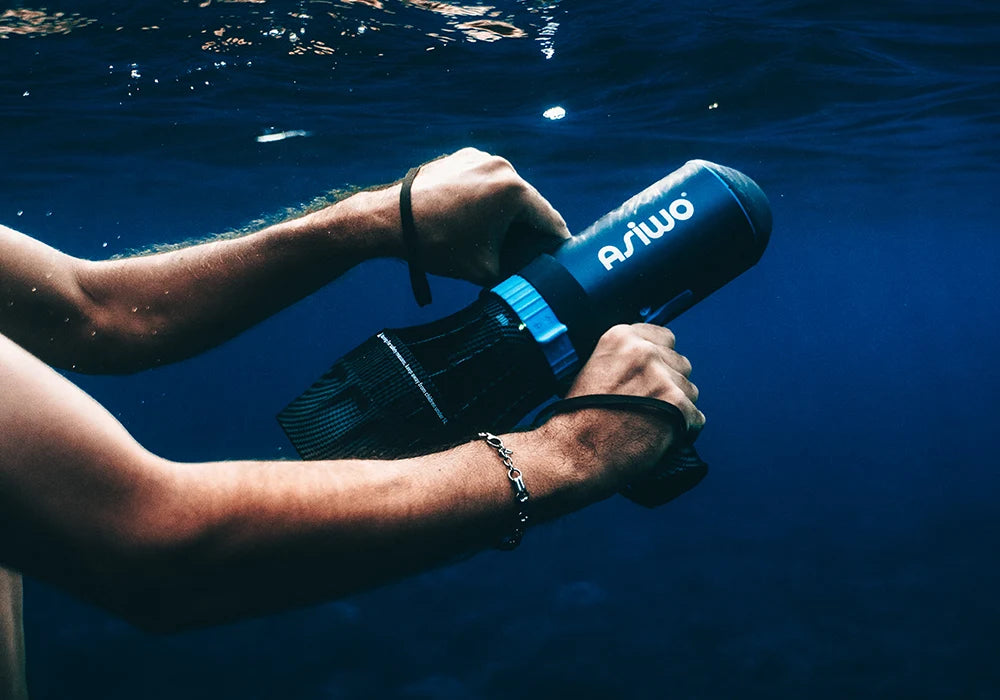
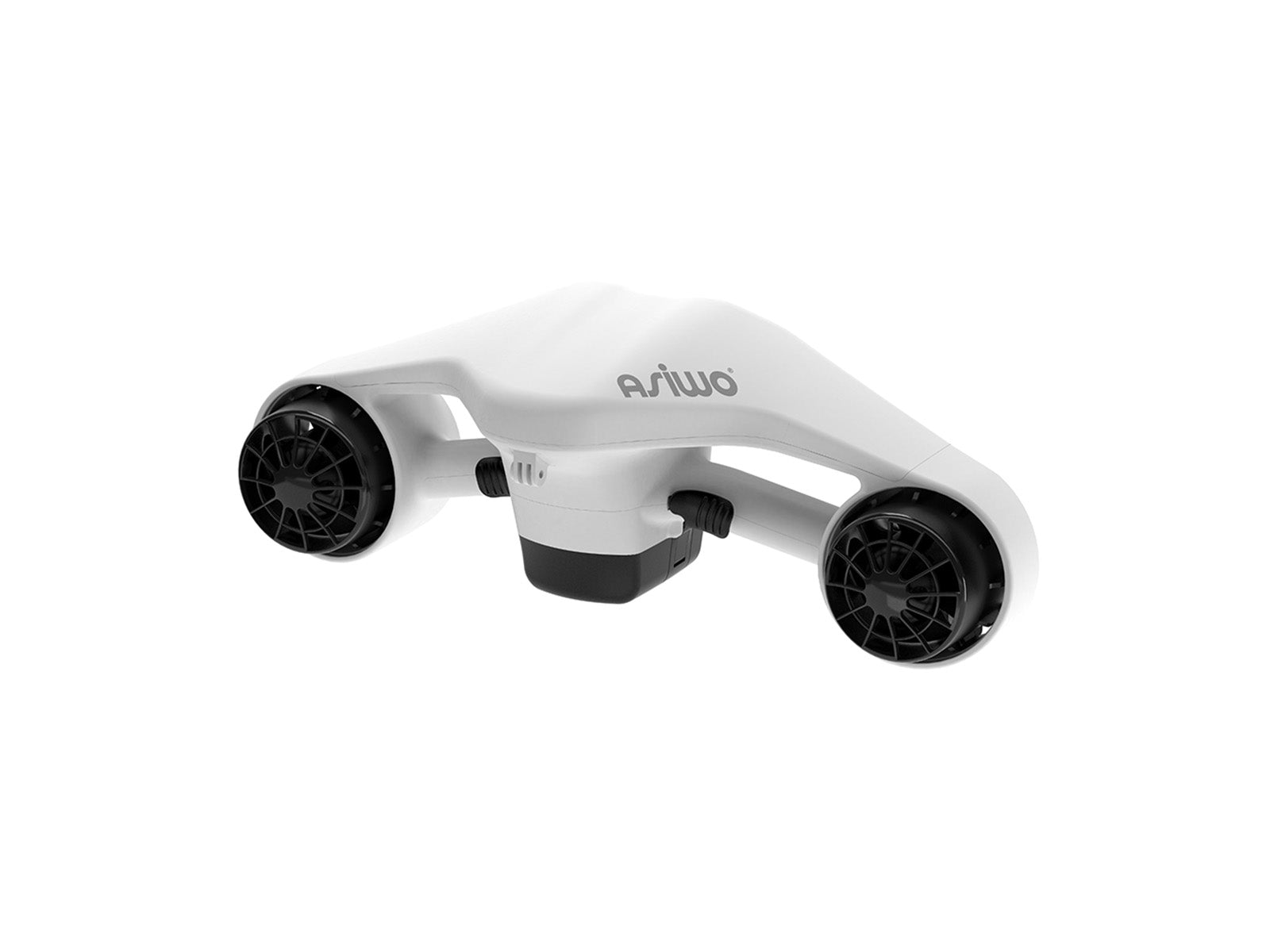
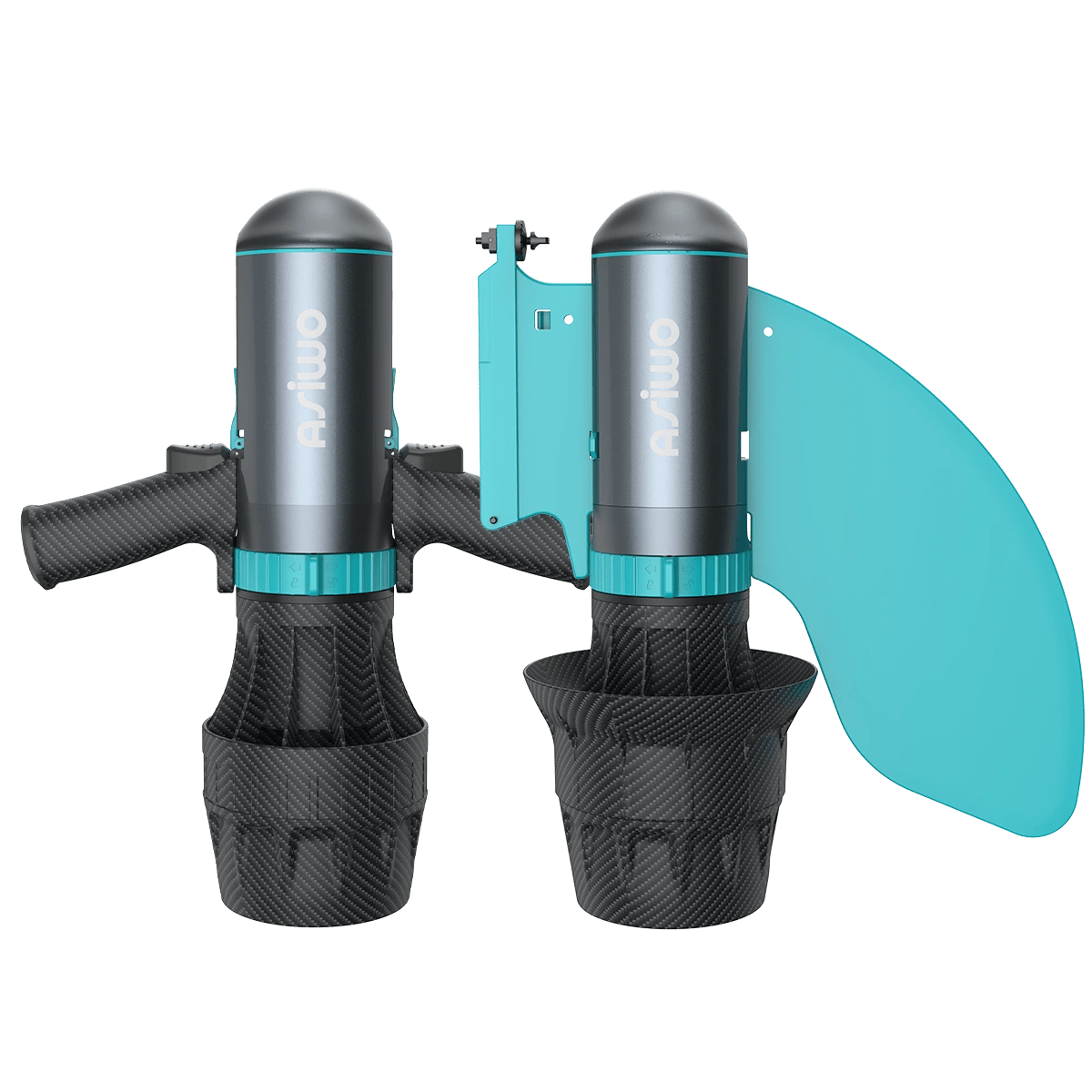
Towing a surface buoy in ocean chop creates continuous hydrodynamic drag that exhausts human leg muscles. Pairing your safety buoy with the dual-propeller ASIWO MANTA 2 Sea Scooter allows you to glide effortlessly, maintain your legal safety radius, and conserve stamina across long reef explorations.
Explore ASIWO MANTA 2 →Safe Distance Rules: How Close Can Boats and Snorkelers Be?
Maritime regulations establish clear separation boundaries between motorized traffic and surface swimmers:
- Boater Stand-off Distance: Maritime enforcement rules, including state fish and wildlife conservation standards, require motorized vessels to maintain a minimum buffer of 100 feet (approx. 30 meters) from dive flags in rivers, inlets, and narrow navigation channels, and at least 300 feet (approx. 90 meters) in open coastal waters. Inside these buffer zones, boats must operate strictly at idle speed without throwing a wake.
- Snorkeler Perimeter Radius: Snorkelers and divers must stay within 100 feet (30 meters) of their deployed flag. Drifting outside this safety radius voids your legal buffer and exposes you to live boat traffic where pilots do not anticipate swimmers.
- Flag Stiffener Requirement: In calm or light breeze conditions, fabric flags collapse around the mast. Legally compliant dive flags incorporate a rigid wire stiffener to hold the flag fully extended at all times.
If you are coordinating scooter towing or operating underwater propulsion devices with a float line, review our specific operating boundaries in sea scooters and dive-flag tow lines: control limits and safety checks.
Shore Snorkeling vs. Boat Diving Display Standards
Flag deployment protocols depend directly on how you enter the water:
- Shore Snorkeling & Shallow Dives: Use a lightweight, high-visibility torpedo buoy or inflatable float tube. The flag must measure at least 12 x 12 inches and sit high enough above the water so surface swell does not obscure it.
- Boat Diving Operations: Vessels supporting divers or snorkelers must fly a flag measuring at least 20 x 24 inches from the highest practical point of the superstructure, ensuring 360-degree visibility. When divers return to the vessel and all gear is secured, the flag must be immediately lowered to avoid confusing other navigators.
- Mastering Snorkel Gear: For tips on managing surface breathing and clearing your tube while monitoring surface markers, see our complete guide on how does a snorkel work.
Common Snorkeling Dive Flag Mistakes to Avoid
Even experienced ocean enthusiasts make critical rigging errors that endanger safety:
- Using a Sinking Tow Line: Braided nylon cord drops below the surface, snagging on shallow reef heads and anchoring the swimmer underwater during tidal surges.
- Displaying Flags While Out of Water: Leaving a dive flag erected on a kayak or support skiff while relaxing on deck desensitizes boaters to active swimmer perimeters. Lower the flag as soon as all swimmers are aboard.
- Tying Knots Around Limbs: Wrapping tow line around a hand, wrist, or ankle creates an extreme drowning hazard if a passing craft snags the buoy. Always use quick-release clips.
- Neglecting Low-Light Visibility: Snorkeling near dawn, dusk, or in overcast chop requires attaching a waterproof marine strobe or high-intensity glow stick to the flag mast.
FAQs
Can I tie the dive flag line directly to my wrist or ankle?
No. Never attach a tow line directly to your limbs. If a surface boat or jet ski catches the buoy or line in its propeller, a knotted line will pull the swimmer down instantly. Always use a marine quick-release clip connected to a waist belt or an approved handheld spool that can be jettisoned in under one second.
Do I need a dive flag if I only snorkel in shallow water near shore?
If you are inside designated, buoy-cordoned swimming areas (such as municipal beach parks), flags are typically unnecessary. However, when venturing beyond swim zones, crossing sandbar channels, or snorkeling along jetties where motorized skiffs transit, displaying a dive flag is legally required and life-saving.
How do I manage the dive flag when using a sea scooter or electric kickboard?
When operating a motorized underwater scooter, tether the floating line to a rear tow point or your personal waist harness with a quick-release clip, ensuring the line streams cleanly behind your propeller wake. Never allow tow lines to drift near the scooter's intake grilles.
What should I do if a boat approaches my dive flag too quickly?
Stay within 10 feet of your flag buoy—it is your highest-visibility marker. Sound an emergency marine whistle, wave a bright fin vertically above the surface, and prepare to make a defensive surface dive away from the vessel's hull path if the skipper fails to yield.


Laissez un commentaire