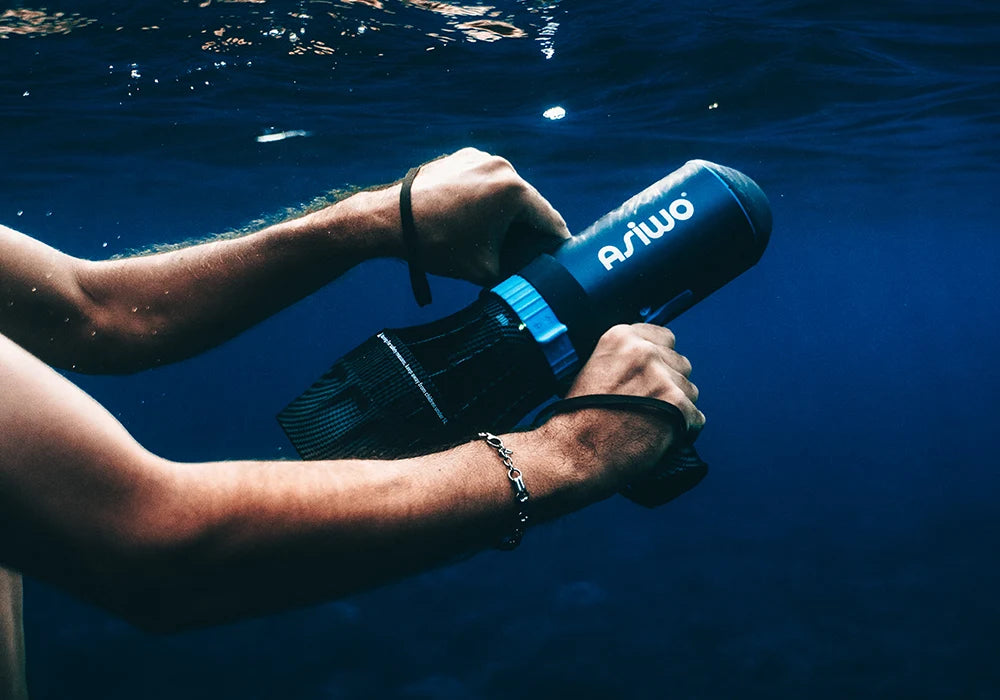







A diver propulsion vehicle can usually dive as deep as its rated depth allows, but most recreational DPV use happens within normal recreational scuba limits, often around 60 to 100 feet and sometimes up to 130 feet with proper training. Some DPVs are rated much deeper, but the safe depth is not decided by the vehicle alone. It also depends on the diver’s certification, gas plan, water conditions, battery range, and ability to handle the scooter at depth.
A DPV can make underwater travel easier, but it does not remove the normal rules of diving. A powerful scooter may help a diver cover more distance with less finning, but deeper water adds more pressure, more gas planning, shorter no-decompression time, and less room for mistakes.
How Deep Can a Diver Propulsion Vehicle Dive?
Most recreational diver propulsion vehicles are designed for depths commonly used in scuba diving, often somewhere between 100 and 130 feet. More advanced DPVs may have deeper ratings, such as 164 feet, 230 feet, or more, depending on the model and construction.
The key point is simple: the DPV’s maximum depth rating is only one limit. The diver’s safe depth may be shallower.
For many recreational divers, a realistic DPV dive depth looks like this:
- Snorkeling and shallow reef use: surface to about 30 feet
- Beginner scuba use: around 30 to 60 feet
- Recreational scuba use: around 60 to 100 feet
- Advanced recreational dives: up to about 130 feet
- Technical DPV diving: deeper than 130 feet only with specialized training and equipment
A DPV rated to 200 feet does not mean a recreational diver should take it to 200 feet. The diver still needs the right certification, gas supply, decompression knowledge, buddy plan, and emergency procedure.
DPV Depth Rating vs Dive Depth
A DPV depth rating tells you how much water pressure the device is designed to withstand. It usually refers to the housing, seals, motor system, battery compartment, and control parts.
Dive depth is different. Dive depth is the depth a diver can safely manage based on training, experience, equipment, and conditions.
For example, a scooter may be rated to 130 feet, but if the diver is only trained and comfortable to 60 feet, then 60 feet is the real limit. The scooter’s rating does not extend the diver’s certification or judgment.
Common Recreational Depths
Most recreational DPV dives stay well within standard recreational diving ranges. Many reef, wall, and wreck dives with DPVs happen between 40 and 100 feet because that range gives divers more time, better light, and easier emergency options.
Dives near 130 feet require more careful planning. Gas consumption rises with depth, no-decompression time gets shorter, and any scooter problem becomes more serious because the diver is farther from the surface and often farther from the entry point.
What Limits DPV Diving Depth?
A diver propulsion vehicle does not decide the full dive plan. It only changes how the diver moves underwater. The real depth limit comes from several factors working together.
The main limits are:
- The DPV’s pressure rating
- The diver’s certification level
- Gas supply and no-decompression limits
- Visibility and current
- Battery life and distance from the exit point
- The diver’s ability to control buoyancy while using the scooter
A DPV can make a dive feel easier because it reduces finning effort. That can be helpful on long swims, mild current, or large reef sites. The downside is that it can also carry a diver farther than they could comfortably swim back.
Device Pressure Rating
Water pressure increases quickly with depth. Every part of a DPV must handle that pressure, including the outer shell, seals, buttons, motor area, battery compartment, and charging ports.
If a DPV goes beyond its rated depth, several problems can happen:
- Water can leak into the housing
- Controls may become harder to operate
- The battery compartment may be stressed
- The motor may lose performance
- The unit may shut down or fail underwater
Using a DPV beyond its rating is not worth the risk. Even if it works once, repeated over-depth use can damage seals and shorten the life of the vehicle.
Diver Certification
The diver’s training limit matters more than the scooter’s maximum number. A DPV is not a shortcut into deeper diving.
A diver trained for shallow recreational diving should not use a DPV to go deeper simply because the scooter can handle it. Deeper dives require better gas planning, buoyancy control, ascent discipline, and emergency response.
DPV-specific training is also useful because scooter diving changes the way divers manage speed, distance, buddy contact, and navigation.
Dive Conditions
A moderate-depth DPV dive can become difficult in poor conditions. Depth alone does not tell the full story.
A 60-foot DPV dive in strong current, low visibility, and cold water may be harder than a 90-foot dive in calm, clear water. Conditions affect how safely the diver can navigate, turn around, find the exit point, and stay close to a buddy.
Before using a DPV at depth, divers should check:
- Current direction and strength
- Visibility
- Entry and exit points
- Boat traffic
- Surface conditions
- Bottom terrain
- Temperature and exposure protection
- Distance from shore or boat
Is a Deeper Rated DPV Always Better?
A deeper rated DPV is not always better. A higher depth rating can show stronger construction, but casual divers may care more about control, runtime, buoyancy, weight, portability, and simple operation.
For recreational users, the best DPV is usually the one that matches the actual dive style. A compact underwater scooter for shallow reef use does not need the same depth rating as a technical DPV for wreck or cave diving.
A deeper rating can be useful, but it should not be the only reason to choose a model.
When Depth Rating Matters
Depth rating matters most for divers who regularly visit deeper sites. This includes deeper reefs, walls, wrecks, caves, and technical dive routes.
A higher rating also gives a safety margin. For example, if a diver usually stays around 80 to 100 feet, choosing a DPV rated beyond that range may offer more confidence than using a model close to its limit.
Depth rating also matters when the DPV will be used often. Repeated pressure exposure can stress seals and housing over time, so a stronger rating can be helpful for frequent divers.
When It Does Not Matter Much
Extreme depth rating matters less for snorkelers, casual ocean users, and shallow recreational divers. If the user mainly explores reefs near the surface or swims along calm shorelines, a very deep-rated DPV may add cost and weight without much practical benefit.
For shallow use, these features often matter more:
- Light weight
- Easy grip and control
- Simple speed modes
- Positive or neutral buoyancy
- Reliable battery life
- Easy rinsing after saltwater use
- Travel-friendly size
A DPV should fit the activity. A heavy, technical-style scooter can feel excessive for casual snorkeling or shallow reef exploration.
How Does Depth Affect DPV Performance?
Depth affects both the diver and the DPV. The scooter may still run normally, but the dive becomes less forgiving as depth increases.
At greater depth, divers use gas faster, have less no-decompression time, and need more careful ascent control. A DPV can also increase distance traveled, which means a diver may be farther from the boat, shore, or exit point if the battery runs low.
Battery and Runtime
DPV runtime depends on how the vehicle is used. A scooter may last much longer at low speed than at full power. Drag, current, diver size, gear load, and repeated acceleration can reduce battery time.
Depth does not always drain the battery by itself, but deeper DPV dives usually require better planning because the consequences of poor planning are greater. A low battery at shallow depth near the beach is annoying. A low battery at depth, far from the exit point, is a real safety issue.
Divers should plan battery use the same way they plan gas: leave enough reserve to return safely.
Control and Buoyancy
A DPV can pull a diver forward quickly. That movement changes how the diver manages buoyancy and depth.
A diver should not use a DPV to force a fast descent or ascent. Rapid depth changes can create serious risk, especially during ascent. The scooter should move the diver horizontally more than vertically.
Good DPV control means the diver can:
- Hold a steady depth
- Stop smoothly
- Turn without losing buddy contact
- Avoid stirring sediment
- Stay clear of coral, wrecks, lines, and other divers
- Release or stop the scooter quickly if needed
Poor control at depth can lead to rapid ascents, collisions, separation, or navigation mistakes.
Emergency Distance
One of the biggest DPV advantages is distance. One of the biggest DPV risks is also distance.
A scooter can help a diver cover a large reef, wall, or wreck site with less effort. But if the DPV fails, the diver may need to swim back without motor assistance. That is why DPV dives need a conservative turnaround point.
The dive plan should answer one question clearly: Can we return safely if the DPV stops working?
If the answer is no, the dive plan is too aggressive.
How Do You Choose the Right DPV Depth Rating?
Choose a DPV depth rating based on the dives you actually plan to do, not the deepest number on the product page. The right scooter should leave a safety margin below its maximum rating and match your training, dive environment, and travel needs.
A simple way to think about it:
| Use Case | Practical Depth Need | What Matters Most |
|---|---|---|
| Snorkeling | Surface to 30 ft | Weight, buoyancy, simple controls |
| Shallow reef diving | 30 to 60 ft | Runtime, control, easy handling |
| Recreational scuba | 60 to 100 ft | Depth rating, battery reserve, reliability |
| Advanced recreational dives | Up to 130 ft | Strong seals, planning margin, training |
| Technical diving | Beyond 130 ft | Specialized DPV, redundancy, advanced training |
The deeper and farther the dive, the more the DPV becomes part of the safety plan rather than just a fun accessory.
For Snorkeling and Shallow Use
For snorkeling and shallow reef exploration, a deep-rated DPV is usually not necessary. The user is close to the surface, and the main goal is easy movement, relaxed exploration, and reduced swimming effort.
A good shallow-use scooter should be light, easy to hold, and simple to stop. Positive buoyancy can also help because the device is less likely to sink if released.
For Recreational Scuba
For recreational scuba, choose a DPV rated beyond the depth you plan to dive. If your typical dives are around 60 to 100 feet, a scooter with a rating above that range gives more confidence.
Look for reliable sealing, enough runtime, stable handling, and controls that are easy to use with gloves. Weight also matters because divers must carry the unit before and after the dive.
For Advanced Diving
Advanced wreck, cave, deep, or technical DPV use requires specialized training. These dives may involve overhead environments, decompression obligations, navigation complexity, and greater distance from the exit.
A recreational scooter is not the right tool for serious technical DPV diving. Advanced divers need equipment designed for the environment, plus backup plans for navigation, gas, propulsion, and communication.
How Can You Dive Safely With a DPV at Depth?
A DPV can only dive as deep as its rating, the diver’s training, and the dive plan safely allow. The safest depth is not the maximum number printed in the specs. It is the depth where the diver can still control buoyancy, monitor gas, stay with a buddy, navigate back, and return without relying completely on the motor.
DPVs are useful because they reduce effort and extend range. They become risky when divers use them to go too deep, too far, or too fast.
Check the Rating First
Always confirm the DPV’s depth rating before using it. Do not assume all underwater scooters are built for scuba depth. Some models are designed mainly for pools, snorkeling, or shallow water.
Check the manual or product specifications for:
- Maximum depth rating
- Saltwater use guidance
- Battery runtime by speed mode
- Buoyancy behavior
- Maintenance instructions
- Seal and O-ring care
A DPV should be inspected before each dive, especially after travel or long storage.
Plan the Turnaround Point
DPV dives need a clear turnaround point. The plan should account for battery, gas, distance, current, and exit route.
A safe plan should include:
- Starting battery level
- Planned depth
- Maximum distance from exit
- Turn pressure or turn time
- Buddy position
- Lost buddy procedure
- Low battery procedure
- Plan for swimming back without the DPV
The scooter should support the dive plan. It should not become the only way to complete the dive.
Stay Within Training Limits
Stay within your certification and comfort level. A DPV can make a dive feel easier at first, but depth still increases risk. Deeper water reduces no-decompression time, increases gas use, and makes emergency decisions more serious.
New DPV users should practice in shallow, calm water before taking the scooter deeper. They should learn how to start, stop, turn, share space with a buddy, manage speed, and hold depth without being pulled up or down.
Conclusion
A diver propulsion vehicle can dive as deep as its design allows, but real dive depth depends on more than the scooter. Most recreational DPV use stays within 60 to 100 feet, with advanced recreational dives sometimes reaching 130 feet under the right conditions. Some DPVs are rated deeper, but deeper ratings only matter when the diver has the training, equipment, and plan to use them safely.
The best answer is not “take it to the maximum depth.” The better answer is: choose a DPV rated for your planned dives, leave a safety margin, stay within your certification, and plan every DPV dive as if you may need to swim back without motor power.
FAQs
How deep can a recreational DPV go?
Many recreational DPVs are rated around 100 to 130 feet, though exact ratings vary by model. The diver should still stay within their certification limit and planned dive depth.
Can a DPV go deeper than 130 feet?
Some advanced and technical DPVs can go deeper than 130 feet, but those depths require specialized training, gas planning, and equipment. A deeper-rated scooter does not make a diver qualified for deeper diving.
Is a DPV safe for beginner divers?
A DPV can be safe for beginners in shallow, calm water with proper instruction and supervision. New divers should not use a scooter to extend depth, distance, or dive complexity before they have strong buoyancy and navigation skills.
Does depth affect DPV battery life?
Depth alone is not always the main battery drain. Speed setting, current, drag, diver size, gear load, and how hard the motor works usually matter more. At depth, battery planning becomes more serious because returning without power may be harder.
What happens if a DPV fails underwater?
If a DPV fails underwater, the diver should stop using it, signal the buddy, control buoyancy, and follow the return plan. The dive should always be planned so the diver can return safely without relying only on the scooter.


Dejar un comentario