






An open-water swim club does not need a product that makes one swimmer look fast for five minutes. It needs gear that fits the rhythm of a group: swimmers leaving together, a support boat or board staying close, a coach watching spacing, and everyone coming back inside the plan.
That is the frame ASIWO would use for MANTA 2 and U1. Both are capable products, but they answer different club problems. MANTA 2 makes more sense when the device is swimmer-facing. U1 makes more sense when the device is crew-facing.
Once that distinction is clear, the buying decision gets much easier.
Quick Answer
Choose ASIWO MANTA 2 if your open-water swim club wants a handheld scooter for supervised swimmer rotation near a support boat, buoy line, dock, or calm practice zone. It is the better fit when the swimmer is the person holding the product.
Choose ASIWO U1 if the product belongs with trained support crew, a paddle board setup, or a more versatile water-support plan. It is the better fit when the crew is using powered assistance to manage the session.
The question is not which product is stronger. The question is who is supposed to use it during the session.
The Mistake Swim Clubs Should Avoid
The common mistake is buying powered gear and then deciding the role later. That creates confusion on the water. Is the device for swimmers to try? Is it for the support crew? Is it backup movement around the route? Is it a confidence station near the boat?
Those roles should not blur together.
If a swimmer is using the product, the session should feel short, visible, and easy to stop. If support crew are using it, the product should help the crew move efficiently without distracting from the swimmers. If the route is already hard to watch, powered gear should not be added just because it is available.
For an open-water swim club, powered gear is useful only when it makes the leader's job clearer. If it creates more questions on the water, the session was not ready for it.
A good club buyer will usually feel this before they can explain it. If the product makes the coach wonder who is watching the swimmers, who has the device, or where the device is supposed to return, the plan is too loose. If the product has one owner, one route, and one reason to be in the water, the club has a much better chance of using it well.
MANTA 2 As A Swimmer-Facing Tool
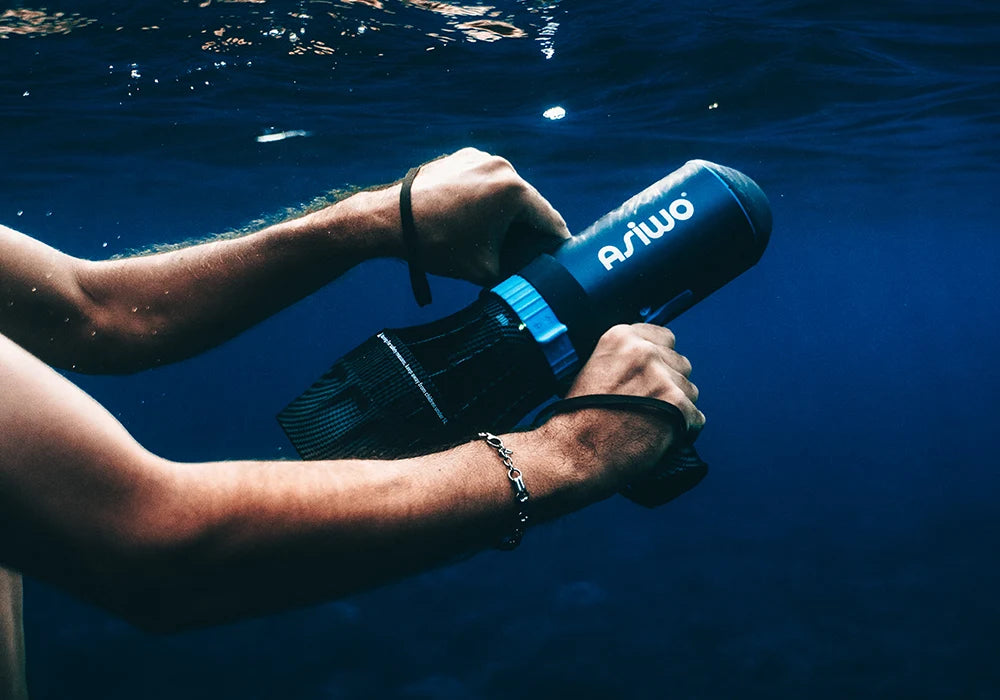
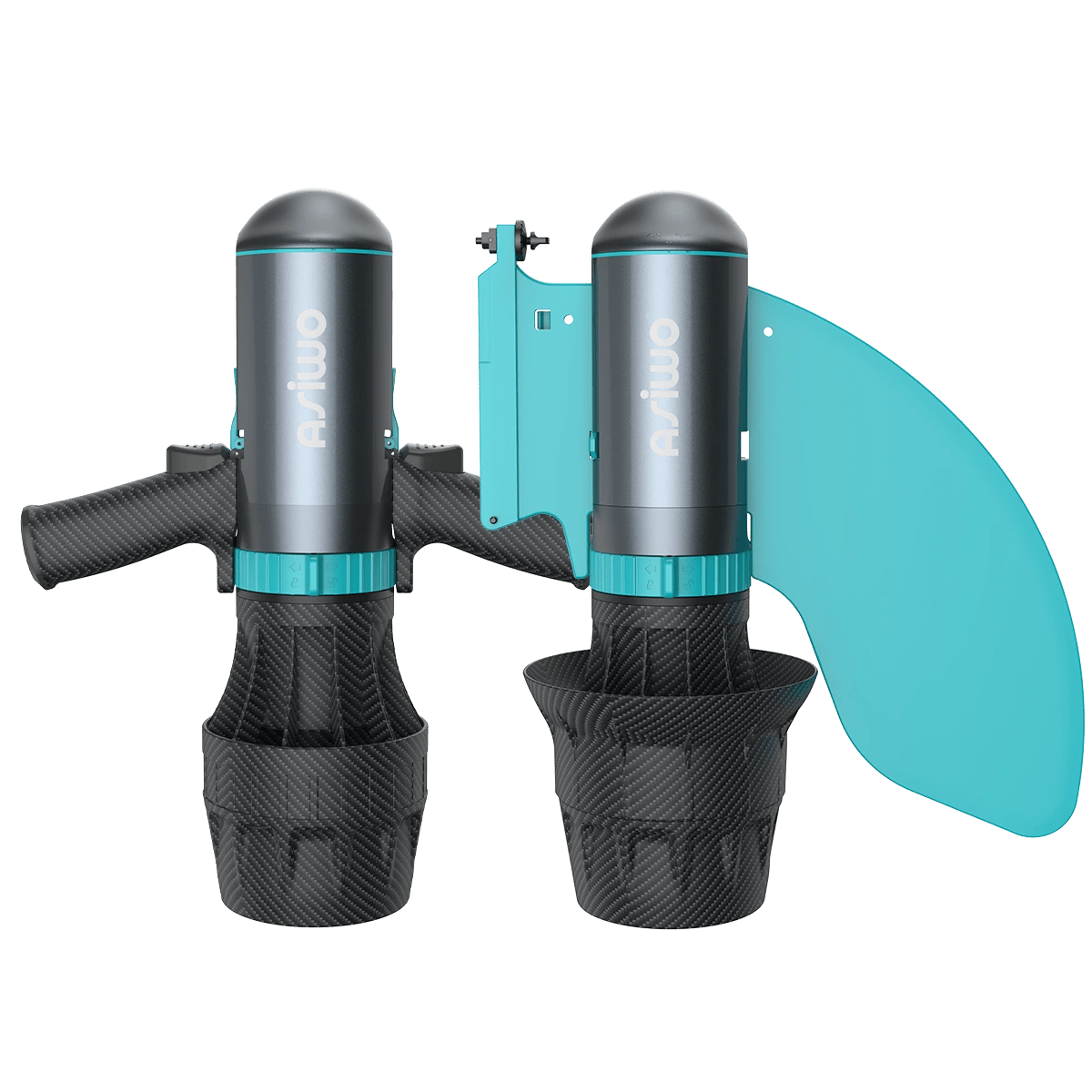
MANTA 2 works best when the swimmer is the user and the coach controls the structure. Think of a short station near the support boat, a controlled pass beside a buoy line, or a confidence drill where one swimmer tries powered movement without leaving the group environment.
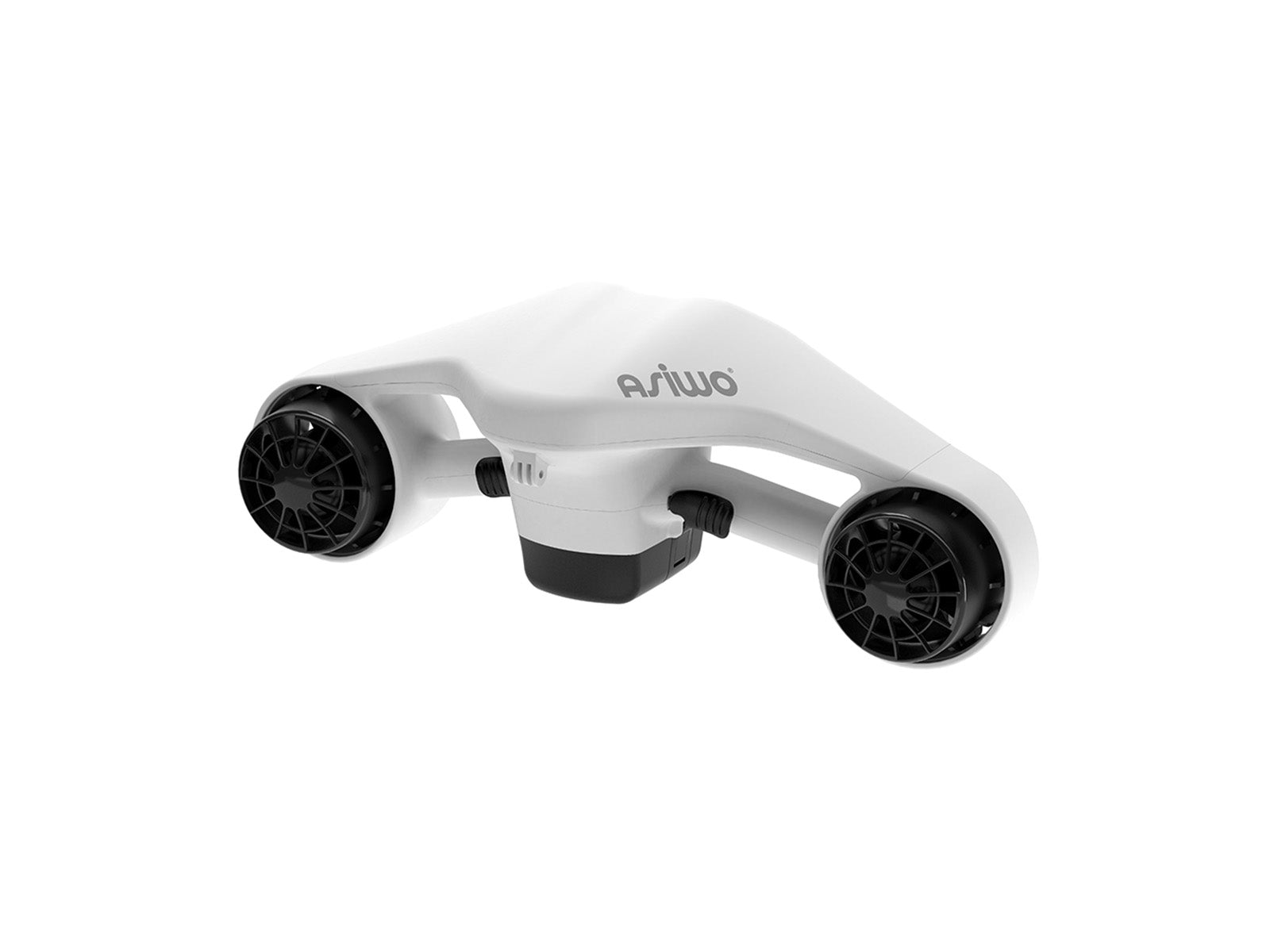
ASIWO lists MANTA 2 at 9.9 lb including the battery, with level 1 at 2 ft/s for up to 90 minutes, level 2 at 6.5 ft/s for up to 30 minutes, and level 3 at 8.2 ft/s for up to 13 minutes. It also lists 15 kgf maximum thrust and a 201.6Wh battery.
In a club setting, those specs point to a simple rule: use the lowest practical mode first. MANTA 2 has enough performance to feel exciting, but the first job is not excitement. The first job is to see whether the swimmer can hold position, follow direction, and stop without pulling away from the session.
MANTA 2 is the better fit when the club wants selected swimmers to experience powered movement while the coach still owns the pace.
That phrase matters: the coach still owns the pace. MANTA 2 should not turn a group swim into a set of individual rides. It should give selected swimmers a controlled way to feel propulsion while staying inside the club's normal supervision pattern.
U1 As A Crew-Facing Tool
U1 belongs in a different conversation. It is more relevant when a support person, board user, or multi-use water program needs a stronger propulsion option.
ASIWO lists U1 with 1100W power, 13.2 lb weight including battery, a 180Wh battery, up to 60 minutes in slow mode, 17 kgf maximum thrust, and up to 10 ft/s maximum speed. The important difference is not just the numbers. U1 can also fit SUP motor planning, which makes it more useful for board-based support than a simple handheld swimmer station.
That does not mean every club needs U1. It means U1 should have an owner. A coach, crew member, or board support user should know why it is in the water, where it is allowed to go, and how it returns if conditions change.
If the product is being passed around casually, U1 is probably the wrong choice for that day.
How We Would Run The First Session
For a first session, we would avoid trying to prove the product's full capability. The goal is to see whether it fits the club's routine.
With MANTA 2, keep the trial close to the support boat or a fixed marker. One swimmer uses it while the rest of the group stays in the normal session structure. The coach watches whether the swimmer follows signals, keeps a steady line, and stops where expected.
With U1, assign it to one trained support person or one planned board setup. Do not let it float between roles. The support person should use it in a limited area first, not across the full route.
The first test should answer one question: did the product make the session easier to run? If the answer is yes, the club can build a repeatable routine. If the answer is no, the product may still be good, but the session format needs work.

Final Recommendation For Open-Water Swim Clubs
Choose MANTA 2 when the product is meant for swimmers under close supervision. It is the more natural fit for short rotations, confidence checks, and controlled practice near a support boat.
Choose U1 when the product is meant for crew support, board support, or a more versatile water program. It is the better choice when one trained user owns the setup and the role is planned before the session begins.
The clean split is this: MANTA 2 is the swimmer-facing option; U1 is the crew-facing option. Keep that distinction clear and the buying decision becomes much less confusing.
If your club is still comparing the broader lineup, use the ASIWO underwater scooters collection to see the product family. For club use, the strongest choice is the one that helps the session stay easier to read from the boat, board, or shoreline.
Can open-water swim clubs use MANTA 2 for training?
Yes, when the use is close, supervised, and limited to a clear route or station. It works best as a controlled experience, not an open-ended ride.
Is U1 better than MANTA 2 for a support boat?
U1 is better when the user is support crew or a board-based support person. MANTA 2 is usually better when the swimmer is the person holding the product.
Should tired swimmers use powered gear to finish a route?
No. A tired swimmer needs normal support decisions first. Powered gear should not be used to push someone beyond the session plan.
What speed should a swim club allow first?
Start with the lowest practical speed. The first trial should prove control and communication, not top speed.
Can U1 replace a support boat or kayak?
No. U1 can support a planned crew role, but it does not replace supervision, communication, flotation, or a reliable exit plan.


Lascia un commento