






On a guided snorkel tour, the best guest experience is usually not the fastest one. It is the one where the nervous guest does not feel left behind, the confident guest does not turn the route into a race, and the guide can still read the whole group at a glance.
That is why ASIWO would compare Manta and MANTA 2 differently for tour leaders than for personal buyers. A solo snorkeler may care most about speed and excitement. A guide has to care about spacing, handoff, guest behavior, and the moment when the group starts drifting too wide.
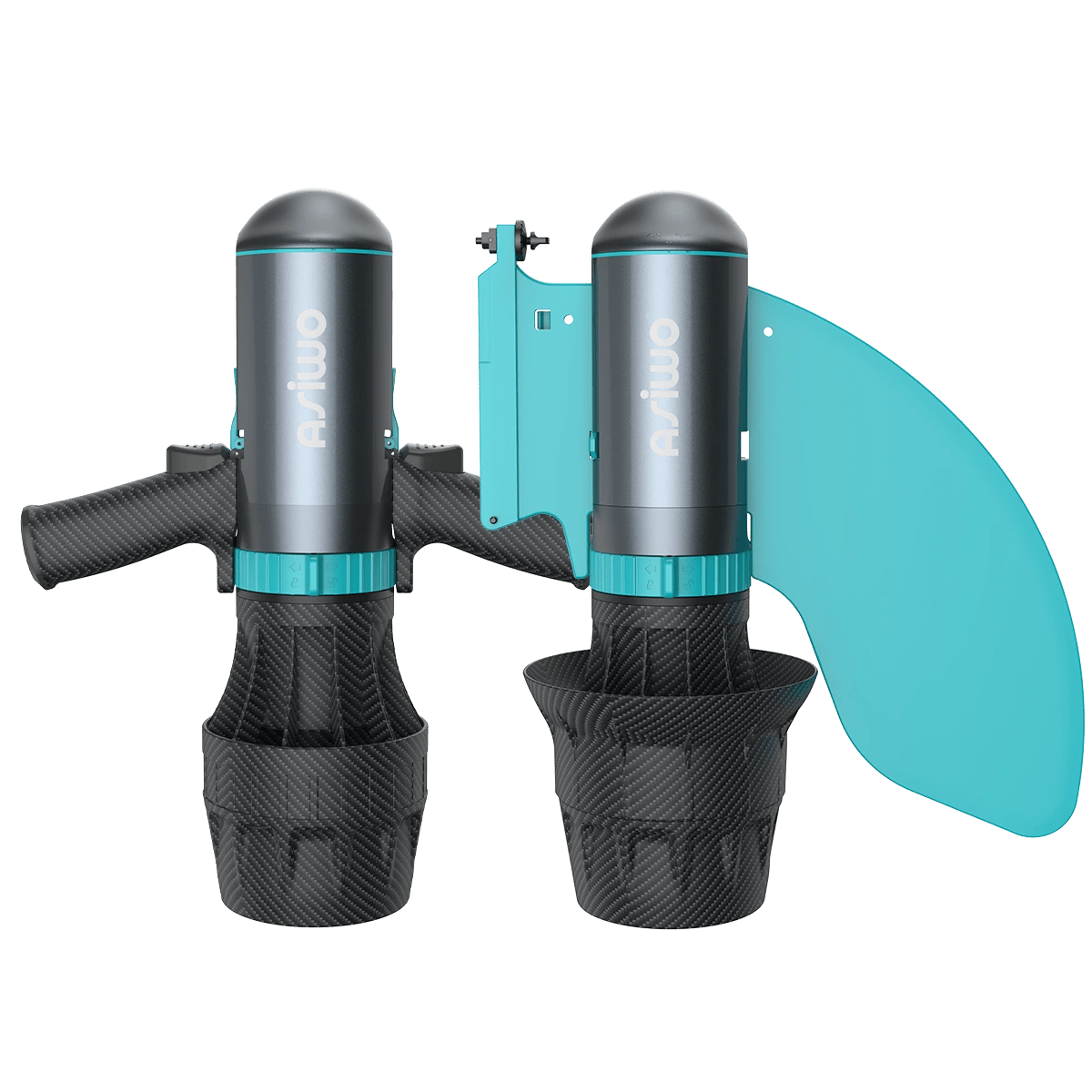
Both products can work in guided settings, but they should not be handed out with the same expectation. Manta is the calmer guest-rotation tool. MANTA 2 is the stronger option for smaller, better-controlled groups.
Quick Answer
Choose ASIWO Manta if your snorkel tour needs a compact sea scooter for calm reef stops, short guest turns, and mixed-confidence groups. It is the easier first choice because the guide can keep the experience gentle.
Choose ASIWO MANTA 2 if your guests are stronger swimmers, the route has more room, and the guide wants more speed and thrust headroom while keeping strict control. It should feel like a planned upgrade, not the default guest handout.
For tour leaders, the better product is the one that keeps the tour feeling organized. If a scooter makes the guide work harder to keep people together, it is the wrong tool for that session.
The Problem A Tour Leader Is Really Solving
The real problem is not propulsion. Guests already know how to move through the water at some level, or they should not be on that route. The harder problem is pacing.
One guest wants to stop for photos. Another keeps kicking ahead. Someone else is relaxed at the boat but tightens up once the reef opens. A scooter can make the day smoother, but it can also exaggerate every difference in the group.
That is why a guided scooter session should feel like a rotation, not a free-for-all. The guest should know three things before touching the product: where to go, where to turn back, and when the guide takes it back.
When the route is framed that clearly, the scooter becomes a guide-controlled experience instead of a guest-controlled distraction.
Manta When The Group Needs Calm
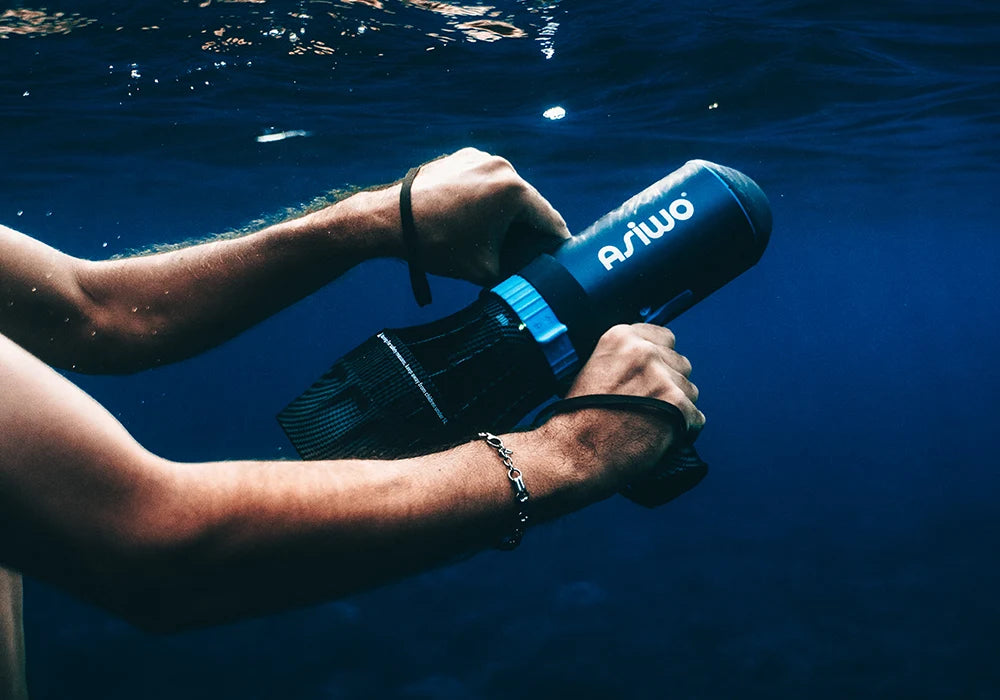
Manta is the model we would look at first for most tour operations. It is listed at 7.7 lb including the battery, with three speed modes at 2 ft/s, 3.3 ft/s, and 5 ft/s. Those are not just specs. They tell you how the product should be introduced.
Slow mode is the working mode for a mixed group. It gives a nervous guest time to breathe and gives the guide time to correct direction. Middle mode may fit stronger guests after they show control. Fast mode should not become the headline of the tour.
Manta fits best when the tour leader wants:
- One guest or one pair using the scooter at a time.
- Short reef passes near the guide.
- A simple two-handle product that is easy to explain.
- A calmer first powered-water experience for guests.
- A product that can be rotated without changing the whole tour plan.
The value of Manta is not that it makes a tour dramatic. The value is that it can make a simple reef stop feel smoother without pulling the group apart.
MANTA 2 When The Route Has More Room
MANTA 2 makes sense when the operation is already more structured. Think smaller groups, stronger swimmers, clearer route boundaries, and guides who are comfortable enforcing speed and distance rules.
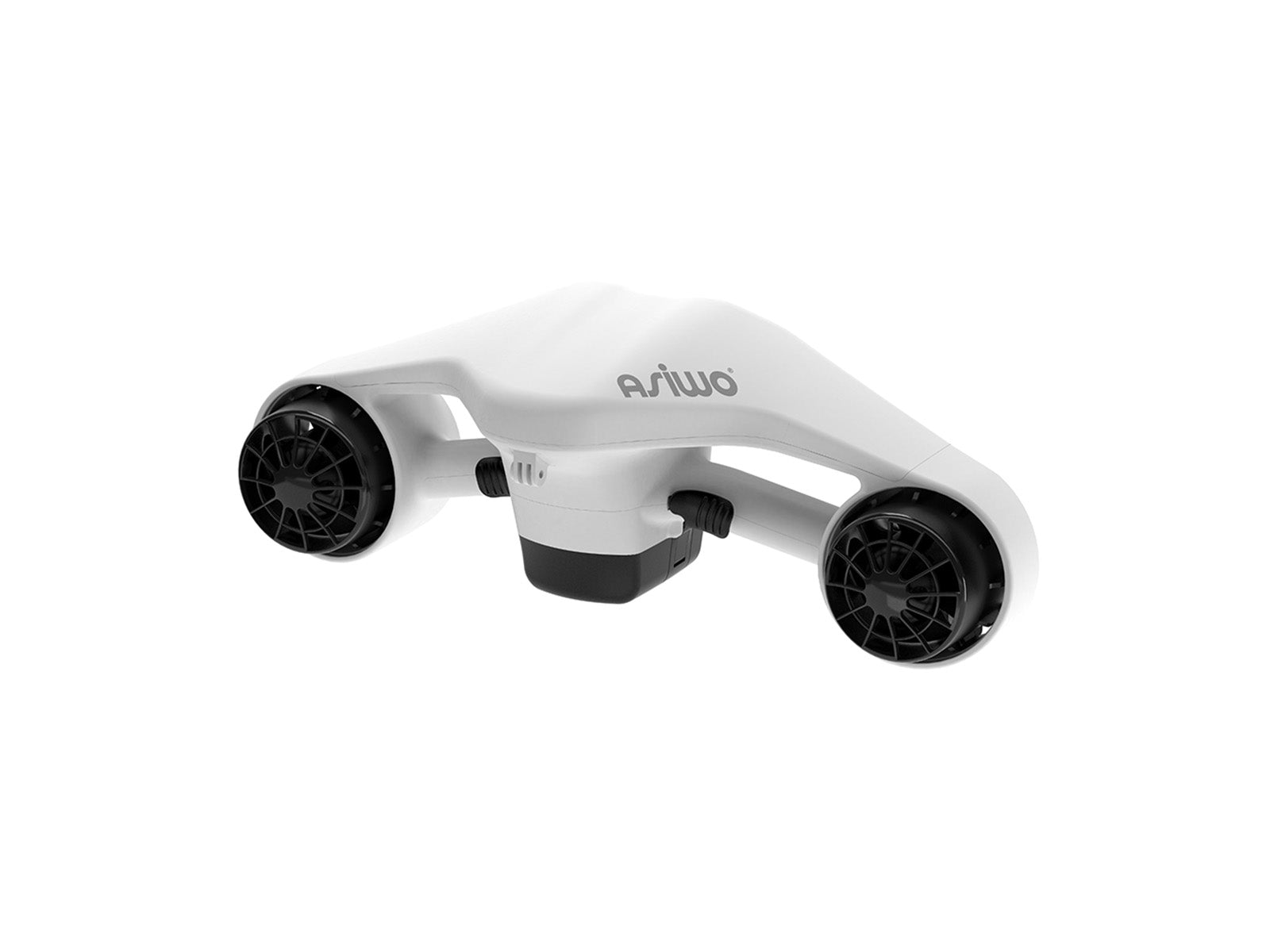
ASIWO lists MANTA 2 at 9.9 lb including the battery. Level 1 is 2 ft/s for up to 90 minutes, level 2 is 6.5 ft/s for up to 30 minutes, and level 3 reaches 8.2 ft/s for up to 13 minutes. It also lists 15 kgf maximum thrust.
Those numbers are useful only if the guide controls them. The extra headroom can help on a longer route or with confident guests, but it also means a rider can separate from the group faster. For that reason, MANTA 2 is not "better" in a general sense. It is better when the tour format can handle it.
A good test is simple: if you would feel nervous giving the guest a faster setting, choose Manta. If the guest, route, and supervision plan already make sense at low speed, then MANTA 2 can be considered.
A Better Guest Rotation Than "Everyone Try It"
The most human way to use a scooter on a tour is to make the guest feel looked after, not tested.
Start near the boat, beach, or calm entry zone. Explain the start and stop action before the guest is excited. Give the guest a short path, such as out toward a marker and back beside the guide. Keep the first turn short enough that the guest finishes wanting another try, not relieved that it is over.
The guide should watch for small signals: tense shoulders, poor breathing, looking down too long, or turning the scooter toward other swimmers. Those details matter more than whether the guest says they are fine.
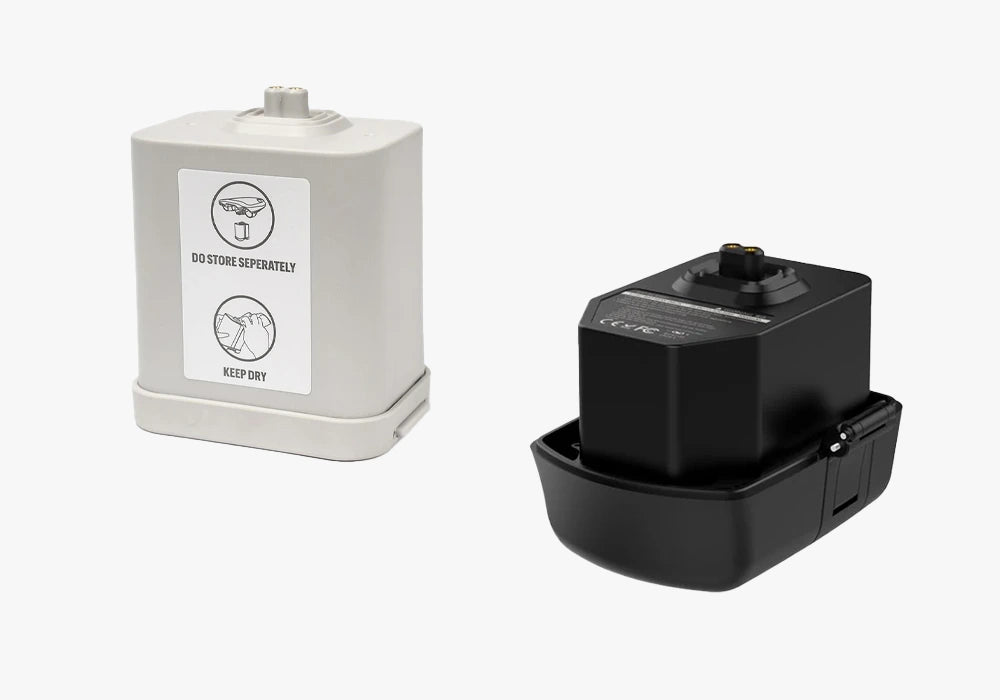
Battery planning should follow the same logic. Manta is listed with up to 35 minutes in slow mode. MANTA 2 has longer low-speed runtime, but no guided tour should plan to use the last few minutes of battery. Keep margin for delays, current, and the return to the boat or shore.

Final Recommendation For Snorkel Tours
For most snorkel tour leaders, start with Manta. It is easier to brief, easier to rotate, and easier to keep inside a calm reef experience. It is the product to choose when the goal is to add a memorable moment without making the tour feel faster than the group can handle.
Choose MANTA 2 when the tour is already more controlled: smaller groups, stronger swimmers, more space, and a guide who can keep higher performance from becoming a problem.
Our simple recommendation is this: if the scooter is mainly for guest confidence and short turns, use Manta. If it is for stronger guests on a planned route, consider MANTA 2. In both cases, keep the guide in charge of distance, direction, and handoff.
If your operation is still comparing the broader product family, the ASIWO underwater scooters collection is the right place to view the lineup. For tour leaders, the real buying question is not which model looks more impressive. It is which model helps guests come back saying, "That felt easy to follow."
Is Manta or MANTA 2 better for snorkel tours?
Manta is better for most mixed guest groups. MANTA 2 is better for stronger swimmers and smaller groups where the guide can control the route closely.
Should every guest get a scooter at the same time?
Usually no. One-at-a-time or pair rotation is easier to supervise and keeps the group from spreading out.
What speed should a tour leader use first?
Start with the lowest speed. The first turn should prove control, not speed.
Can a sea scooter help a nervous guest?
Sometimes, if the guest is otherwise suitable for the route. It should not be used to push someone who is already uncomfortable in the water.
When should a tour skip scooter use?
Skip it when visibility, current, boat traffic, guest behavior, or group size makes supervision harder.


Laissez un commentaire