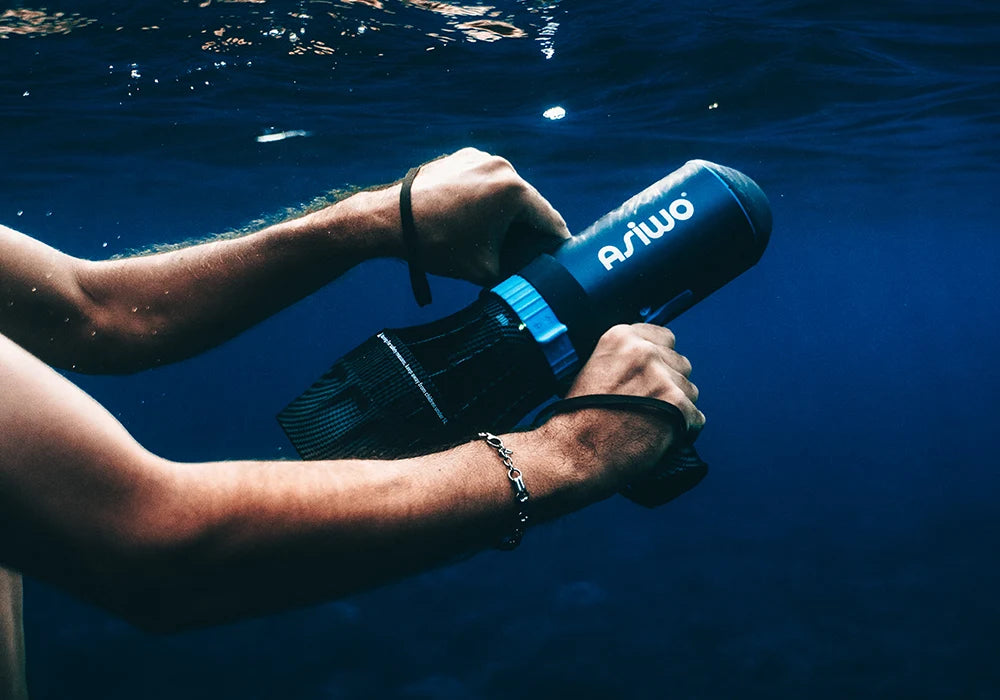







Underwater scooters can make snorkeling easier and more fun, but only if they’re used the right way. Coral reefs are fragile, and careless use can cause damage that takes years to recover. Here’s how to enjoy the extra range and comfort of a sea scooter while protecting the reef beneath you.
1. Keep Your Distance From the Reef
The most important rule is simple: don’t get too close.
-
Stay at least 1.5–2 meters (5–6 feet) above coral whenever possible.
-
Avoid shallow reef tops, especially during low tide.
-
If the water feels “too shallow to glide,” it probably is.
Sea scooters make it easy to drift lower than you realize, so check your depth often and resist the urge to skim the reef for a closer look.
2. Slow Down Near Coral and Marine Life
Speed is where most problems start.
-
Use the lowest speed setting around reefs.
-
Slow down well before changing direction.
-
Never accelerate suddenly near the bottom.
Fast movement increases the risk of accidental contact and stirs up sand, which can smother coral and ruin visibility for everyone.
3. Control Your Trim and Body Position
Good body position matters more with a scooter than with regular snorkeling.
-
Keep your body horizontal, not angled downward.
-
Extend your arms comfortably and avoid pulling yourself lower.
-
Let the scooter pull you forward, not down.
If you feel yourself drifting lower, ease off the throttle and gently adjust your body instead of forcing it.

4. Avoid Sandy Patches Near Coral
Sand may look harmless, but it’s often right next to living reef.
-
Don’t blast across the bottom, even over sand.
-
Prop wash can lift sediment that settles on coral and blocks sunlight.
-
If you see clouds of sand behind you, slow down or gain more height.
Clear water is a sign you’re doing it right.
5. Never Chase Wildlife
Sea scooters make it tempting to follow turtles, rays, or fish. Don’t.
-
Keep encounters passive and brief.
-
Let animals set the distance and direction.
-
If an animal swims away, slow down or stop.
Chasing stresses marine life and often pushes animals into shallow or unsafe areas.
6. Practice Before You Reach the Reef
If it’s your first time using a scooter, don’t learn over coral.
-
Practice in open water or over deep sand.
-
Get comfortable with speed control and turning.
-
Learn how the scooter responds when you release the trigger.
A few minutes of practice can prevent accidental reef contact later.
7. Follow Local Rules and Guide Instructions
Some snorkeling areas restrict or prohibit Sea scooters for a reason.
-
Always ask your operator or guide where Sea scooters are allowed.
-
Respect marine protected zones and no-entry areas.
-
If a guide asks you to turn it off in certain sections, do it.
Responsible use helps keep Sea scooters allowed for future visitors.
Final Thought
An underwater scooter isn’t bad for reefs poor technique is. Used thoughtfully, a scooter can actually reduce damage by limiting fin kicks, lowering fatigue, and helping snorkelers stay calm and controlled in the water. Keep your distance, slow things down, and treat the reef as something to observe, not approach.


Hinterlassen Sie einen Kommentar