






If you want an underwater scooter that feels stronger, smoother, and more stable in the water, dual-motor models are usually the best place to start. They tend to deliver better thrust than basic single-motor options, which makes a noticeable difference during snorkeling, casual diving, and longer recreational rides.
Still, not every dual-motor scooter feels the same. Some are better for lightweight portability, some focus more on speed and power, and others do a better job balancing performance with everyday usability.
In this guide, we’ll look at three standout Underwater Scooters With Dual Motors and break down what each one does well, where each one falls short, and which type of rider each model makes the most sense for.
What We Look for in the Best Underwater Scooters With Dual Motors
If you want stronger propulsion, smoother performance, and a more stable ride in the water, it makes sense to pay close attention to a few key points before choosing a dual-motor underwater scooter:
-
Thrust output: Strong pulling power matters because a dual-motor scooter should feel capable in real use, especially during longer rides or in mild current.
-
Speed modes: Multiple speed settings make the scooter more versatile, whether you want a relaxed cruising pace or faster movement in the water.
-
Battery life: Longer runtime has a direct impact on how practical the scooter feels during actual outings, particularly if you plan to stay in the water for more than a short session.
-
Weight and portability: A model may offer strong performance on paper, but it also needs to be manageable to carry, pack, and handle out of the water.
-
Depth rating: The operating depth should match the way you plan to use the scooter, whether for surface snorkeling, shallow exploration, or deeper recreational use.
-
Safety features: Details such as protective guards, auto shut-off, and a safety lock add meaningful value, especially for beginners, families, and casual riders.
- Ease of control: Good power is only part of the experience. The scooter should also feel intuitive to steer, comfortable to hold, and simple to use in the water.
Please note that not every dual-motor underwater scooter is designed for the same type of rider. Some are better suited to casual snorkeling and recreational fun, while others are built more for stronger performance and deeper-water use.

Table: Quick Comparison of the Best Dual-Motor Underwater Scooters
| Model | Best For | Price | Top Speed | Runtime | Depth Rating | Weight |
|---|---|---|---|---|---|---|
| ASIWO Manta | Most recreational users | $399 | 5 ft/s | Up to 35 min | 131 ft / 40 m | 7.7 lb / 3.5 kg |
| SUBLUE Navbow | Premium performance | $999 | 2 m/s | Up to 60 min | 131 ft / 40 m | 7.49 lb / 3.4 kg |
| Yamaha Seawing II | Sport-style riding | ILS 5,690 | 5 mph | Up to 40 min | 100 ft / 30 m | 8.15 lb / 3.7 kg |
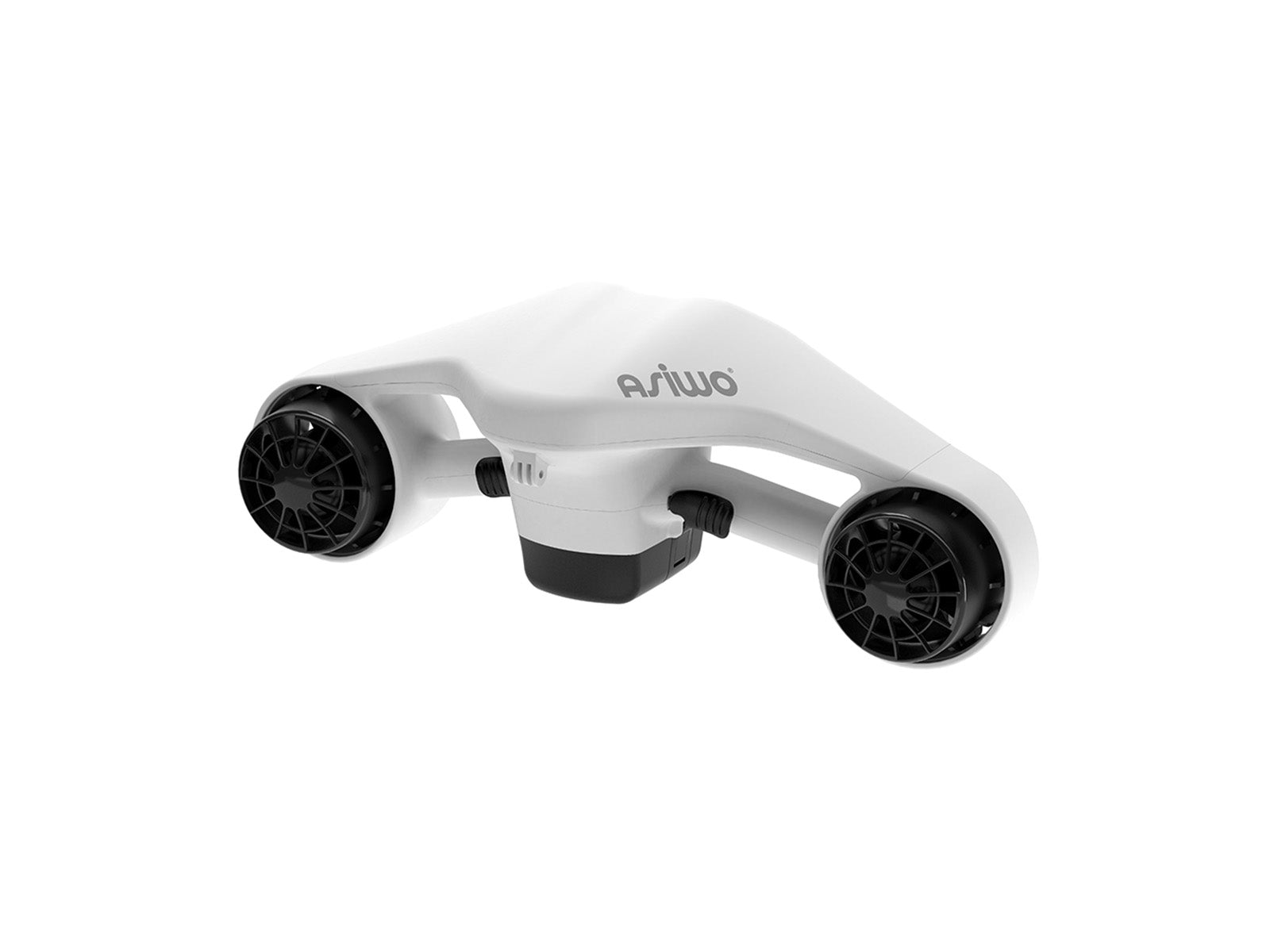
ASIWO Manta Underwater Scooter: Best for Most Recreational Users at $399

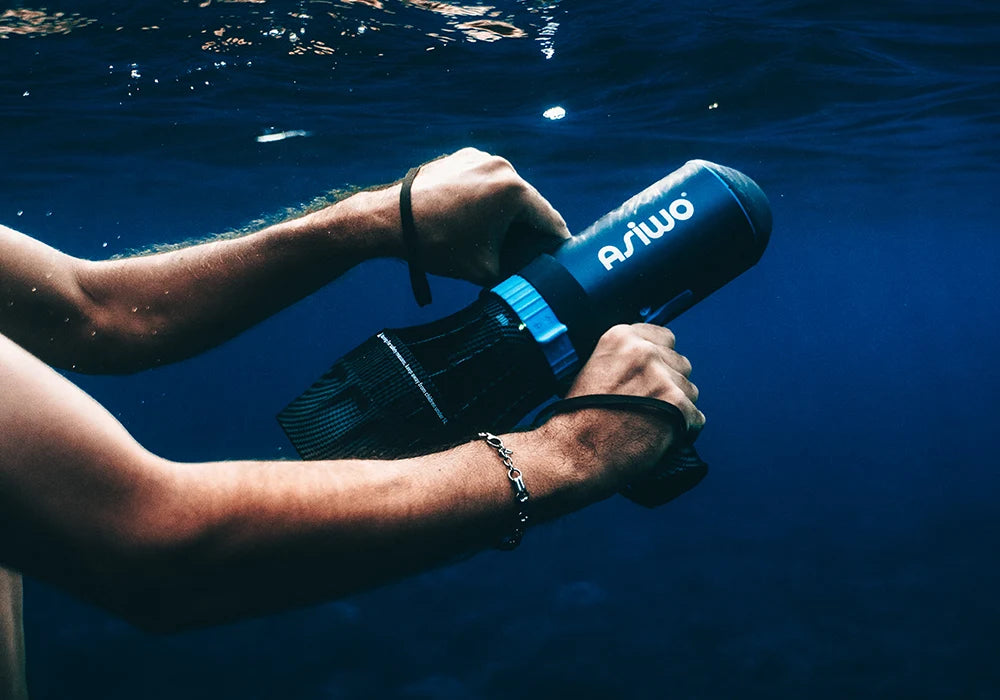
ASIWO Manta is a lightweight underwater scooter for surface snorkeling and shallow-water exploring. With three speed modes, it helps you glide smoothly, reduce fatigue, and keep a steady face-down position for easier breathing.
ASIWO Manta is an excellent choice for recreational users who want a dual-motor underwater scooter that feels strong in the water without becoming bulky or hard to manage. At about 7.7 lb (3.5 kg) with battery, it stays light enough for casual trips, but still gives you up to 9 kgf of thrust, a top speed of around 5 ft/s, and a 40 m (131 ft) depth rating. For a scooter in this size range, that is a very practical balance of power and portability.
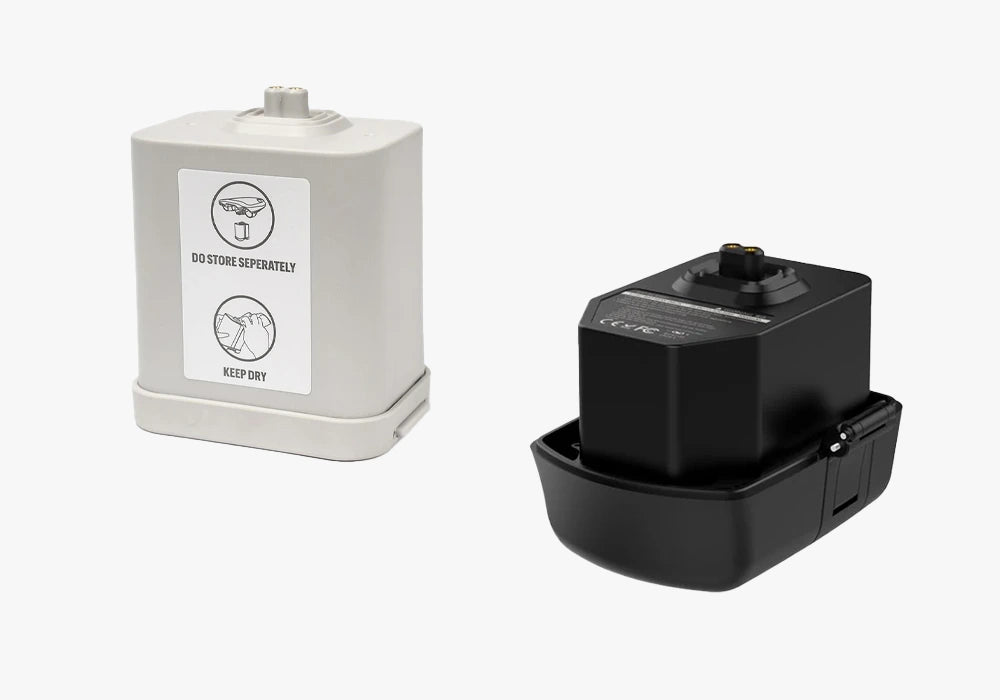
Battery performance is also one of the reasons the Manta stands out. Its 126Wh battery supports three speed modes at roughly 2 / 3.3 / 5 ft/s, with runtime of up to about 35 minutes depending on speed. That makes it a good fit for snorkeling, shallow exploration, and relaxed recreational riding, especially if you want something that feels clearly more capable than a basic entry-level model.
It also does a nice job on user-friendly details. The Manta comes with fully enclosed propellers, auto shut-off, a safety lock, a self-floating design, and a camera mount, so it feels easier to live with beyond just the raw specs. For many casual buyers, that is a big part of what makes it appealing.
Pros
🟢 Dual-motor design
🟢 Up to 9 kgf thrust
🟢 Lightweight and travel-friendlier
🟢 Three speed modes
🟢 Self-floating design
🟢 Enclosed propellers and safety lock
Cons
🔴 High-speed runtime is much shorter than low-speed runtime
🔴 Not the best fit for riders who want a more powerful dive-focused scooter
SUBLUE Navbow: Best Premium Pick at $999
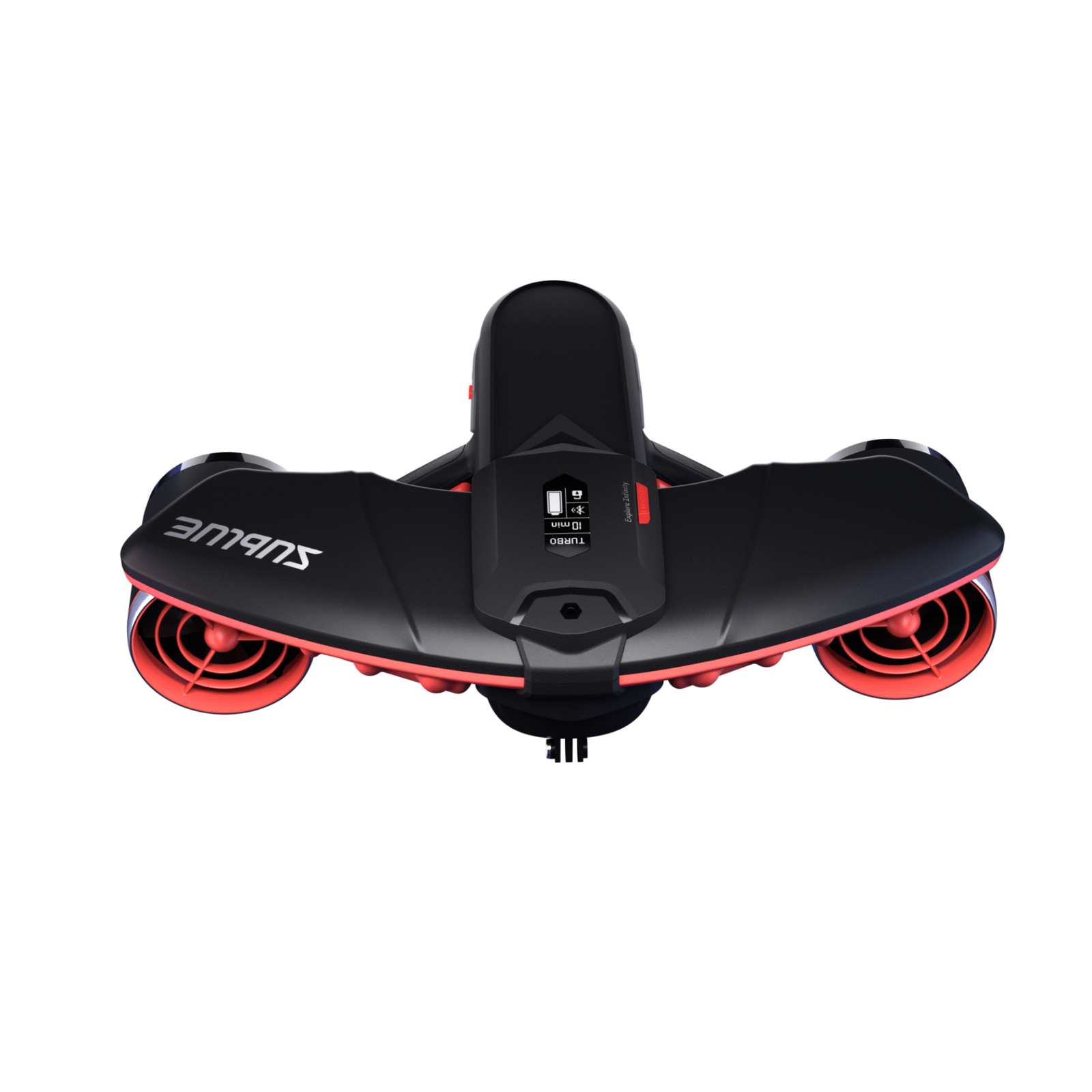
SUBLUE Navbow is a strong premium pick for riders who want a faster and more refined dual-motor underwater scooter. It weighs about 3.4 kg, reaches up to 2 m/s (4.47 mph), and has a 40 m (131 ft) depth rating. That gives it a quicker, more performance-oriented feel than many compact recreational models.
One of the Navbow’s most attractive features is its overall riding experience. It offers three speed levels, up to 60 minutes of battery life, one-hand operation, and an OLED display that helps it feel more polished in actual use. For riders who plan to use their scooter often, those details can matter just as much as top speed.
It is especially appealing for users who want smoother control, easier filming, or a more premium feel in the water. At the same time, it sits in a higher price tier than many recreational options, so it makes the most sense for buyers who know they will actually use those extra features.
Pros
🟢 Dual-motor design
🟢 Up to 2 m/s top speed
🟢 Up to 60 minutes runtime
🟢 One-hand operation
🟢 OLED display
🟢 More premium overall feel
Cons
🔴 More expensive than many casual-use options
🔴 More than some occasional users actually need
Yamaha Seawing II: Best Sport-Style Option

Yamaha Seawing II is a good option for riders who want a dual-motor underwater scooter with a more sport-oriented feel and a familiar brand name. It reaches speeds of up to 5 mph, has around 40 minutes of runtime, and is rated to 100 ft (30 m). It also stays fairly portable at about 8 lb, which helps it remain practical for travel and casual water use.
This scooter also includes a few useful features that improve the experience in real use, including 2-level rotational speed control, an OLED screen for battery and gear information, and neutral buoyancy in salt water. Those details give it a more complete feel than a very basic water scooter, especially for users who want a little more feedback and control while riding.
The Seawing II sits in an interesting middle ground. It has enough power to feel fun and capable, and the Yamaha name will appeal to a lot of buyers. But it is not always the clearest value choice, and it is not always the most feature-packed option either. Its biggest strength is that it offers straightforward dual-motor performance in a compact, recognizable package.
Pros
🟢 Dual motors
🟢 Up to 5 mph top speed
🟢 Around 40 minutes runtime
🟢 OLED display
🟢 Compact and travel-friendly
🟢 Recognizable Yamaha branding
Cons
🔴 Only two speed levels
🔴 Less value-focused than some competitors
🔴 Less feature-rich than some premium models


Leave a comment